How Matcha Is Made: From Shade-Grown Tencha to Powder
How Matcha Is Made: From Shade-Grown Tencha to Powder
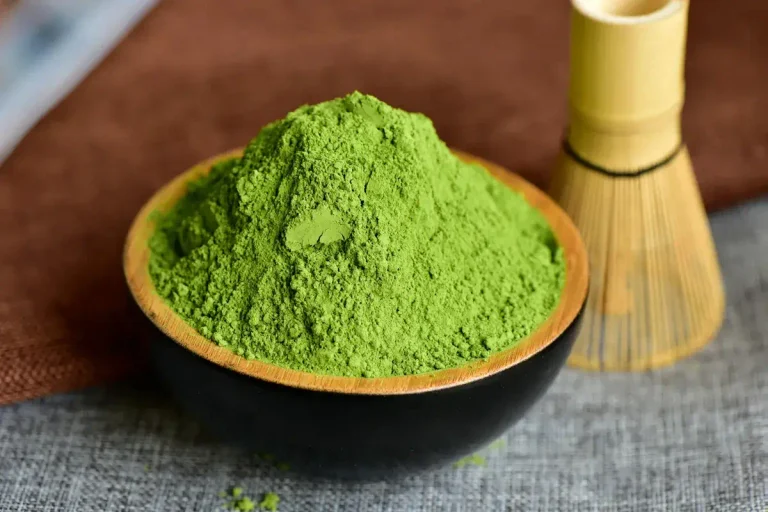
Matcha looks simple. It’s green tea, ground into powder. But the process behind it is one of the most labor-intensive in the tea industry. Six steps stand between a tea plant and a bowl of matcha, and each one shapes the color, flavor, and nutritional content of the final product.
Understanding how matcha is made helps you evaluate it. Once you know what shading, steaming, and stone-grinding actually do, you can spot the difference between real quality and marketing claims.
Here’s the full process, step by step.
Why the Process Matters
Matcha is the only tea where you consume the entire leaf. With regular green tea, you steep the leaves and discard them. With matcha, you drink the leaf itself — which means every step in the process ends up in your cup.
That’s why matcha production is so careful. A mistake at any stage shows up directly in the color, the flavor, and the nutrient content. Shade the plants too little, and the matcha turns bitter. Mill it with heat, and the green fades to olive. Skip destemming, and the texture turns gritty.
In short, the process is the product.
Step 1 — Shading
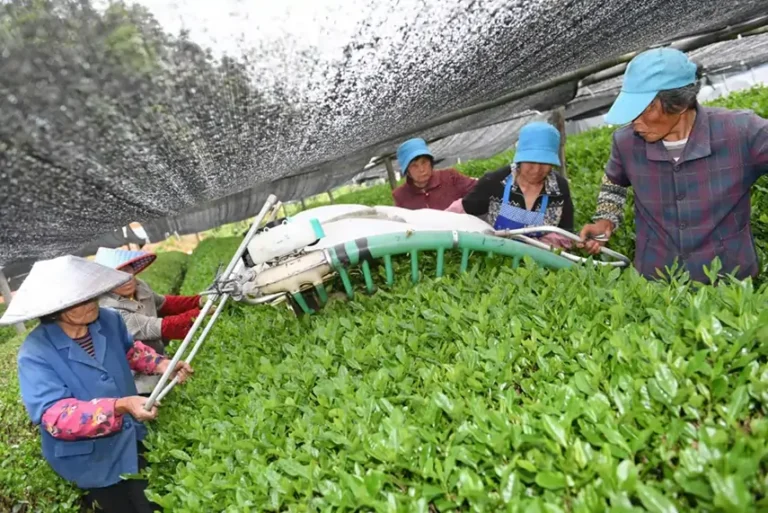
Shading is what makes matcha different from other green teas. About 20 to 30 days before harvest, farmers cover the tea plants with shade cloth, blocking 70 to 90 percent of sunlight.
The plants respond by producing more chlorophyll and more L-theanine. Chlorophyll gives matcha its vivid green color. L-theanine gives it the sweet, umami flavor and the calm, sustained energy that matcha is known for. Meanwhile, shading reduces catechins, which are the compounds responsible for bitterness.
Shading is the single biggest factor in matcha quality. A longer shade period produces a sweeter, brighter, more valuable leaf. A shorter one produces a cheaper, more bitter product.
Step 2 — Harvesting
After shading, farmers harvest the youngest leaves — usually the top two or three. In Japan, this first harvest is called ichibancha, and it happens in late April or early May.
Only the youngest leaves go into ceremonial grade matcha. Older leaves from later flushes end up in culinary grade. The difference is significant: first-harvest leaves are more tender, higher in L-theanine, and lower in catechins than leaves picked weeks later.
Most premium farms still harvest by hand. A machine can pick faster, but it bruises the leaves and mixes in stems. For ceremonial grade, hand-picking is the standard.
Step 3 — Steaming
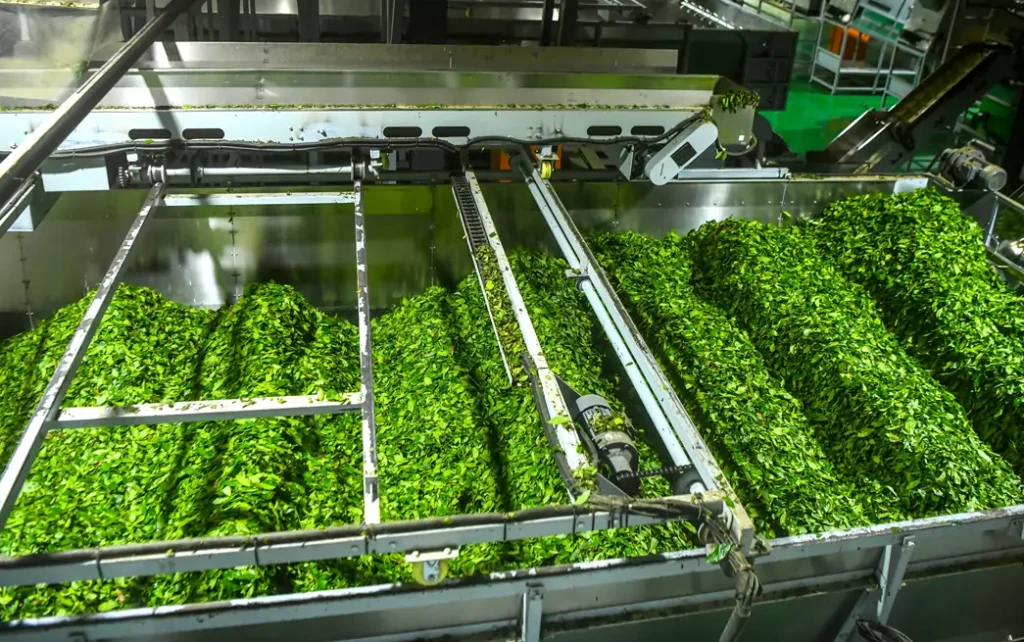
Within hours of harvest, the leaves go into a steamer. Steaming does two things: it stops oxidation, and it locks in the green color.
Oxidation is what turns green tea leaves brown. By steaming the leaves quickly after picking, farmers preserve the chlorophyll and the fresh, vegetal flavor. The process takes 15 to 60 seconds, depending on the leaf and the desired result.
After steaming, the leaves become aracha — rough tea. They’re still far from matcha, but the color and flavor are now locked in.
Step 4 — Drying
Next, farmers dry the leaves. They spread them out and blow warm air through them until the moisture content drops to around 5 percent.
Drying serves two purposes. First, it preserves the leaves for storage. Second, it concentrates the flavor compounds, which makes the final matcha taste richer.
After drying, the leaves become tencha. This is the raw material for matcha — and the point where matcha production separates from other green teas. If farmers rolled the leaves instead of drying them flat, they’d become gyokuro or sencha. Because they dry flat, they can become matcha powder.
Step 5 — Destemming
Tencha still contains stems and veins. Before grinding, farmers remove them.
Destemming matters more than it sounds. Stems and veins are bitter, and they don’t grind as finely as the leaf. If they stay in, the matcha tastes harsh and feels gritty.
Farmers use a combination of air separation and mechanical sorting to remove the stems. The process takes time, and it’s one reason real matcha costs more than you might expect. What’s left after destemming is pure leaf — the material that becomes matcha.
Step 6 — Stone-Grinding
The final step is grinding. Traditional matcha producers grind on granite stone mills, which turn slowly — typically 30 to 60 revolutions per minute.
Speed matters here. Industrial mills run fast and generate heat, which degrades chlorophyll, catechins, and L-theanine. Stone mills run slow and stay cool, preserving the color and the nutrients.
The trade-off is production speed. A granite stone mill produces about 30 to 40 grams of matcha per hour. That’s why stone-ground matcha costs more than industrially milled matcha — and why the difference shows up in the bowl.
After grinding, the matcha gets sifted, tested, and packaged. From harvest to finished powder, the process takes several weeks.
Stone-Ground vs. Industrial Milled Matcha
Not all matcha is stone-ground. Some producers use industrial mills — ball mills, jet mills, or hammer mills — which run faster and cost less. The difference shows up in the final product.
| Factor | Stone-Ground | Industrial Milled |
|---|---|---|
| Speed | 30–60 rpm | High speed |
| Heat generated | Minimal | High |
| Color | Brighter green | Duller green |
| Texture | Finer, smoother | Coarser |
| Flavor | Sweeter, more umami | More bitter |
| Nutrient retention | Higher | Lower |
| Production speed | Slow (30–40 g/hour) | Fast |
| Cost | Higher | Lower |
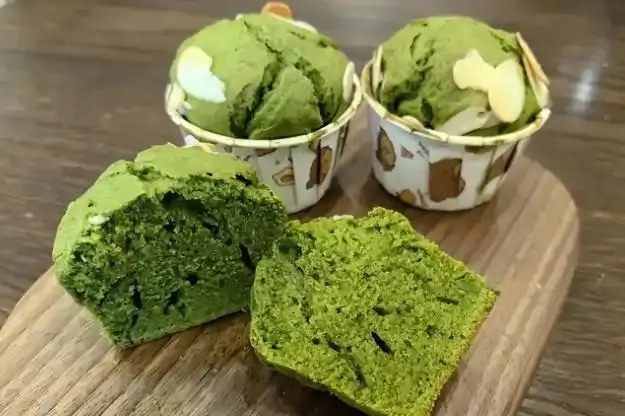
For drinking matcha, stone-ground is the standard. For baking and food manufacturing, industrial milling often works well enough — and costs less.
How We Make Matcha
We follow the traditional process in our own facility in China. We shade our tea plants for 20 to 30 days, hand-pick the first flush, steam and dry the leaves into tencha, destem them, and stone-grind the final powder on granite mills.
Every batch goes through lab testing for color, particle size, moisture, catechins, caffeine, L-theanine, heavy metals, pesticides, and microbials. We provide a Certificate of Analysis with every shipment, and we retain samples for 24 months for traceability.
We hold USDA Organic, EU Organic, ISO 22000, and HACCP certifications.
What to Look for When You Buy
Now that you know the process, you can evaluate matcha more critically. Here’s what to check:
- Color — vivid jade green means good shading and careful milling; dull olive means one or both went wrong
- Aroma — fresh, sweet, grassy; not stale or hay-like
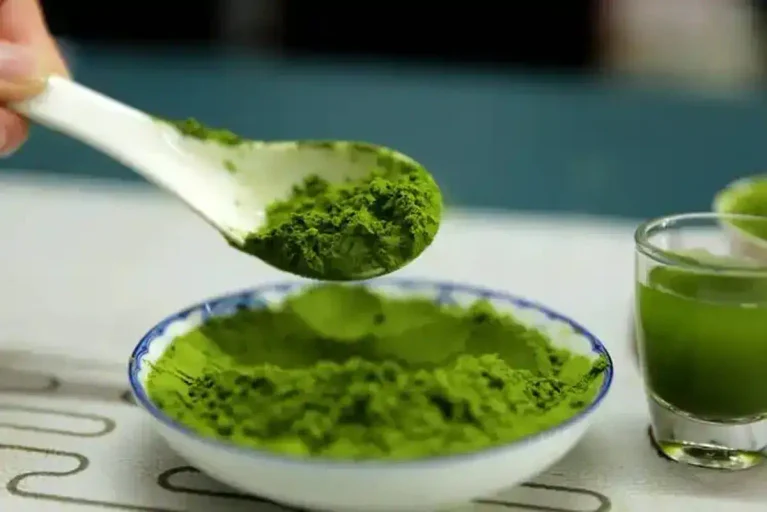
- Texture — fine and silky, not gritty or clumpy
- Solubility — disperses evenly in water or milk without clumping
- Flavor — umami-forward with low bitterness for ceremonial; balanced for culinary
- COA — every batch should ship with a Certificate of Analysis
- Certifications — USDA Organic, EU Organic, ISO 22000, HACCP
Ask your supplier where their matcha comes from and how they mill it. A factory that controls the process can answer in detail. A trader who resells whatever they buy cannot.
Frequently Asked Questions
What is tencha?
Tencha is the raw material for matcha — shade-grown tea leaves that farmers have steamed and dried flat, with stems and veins removed. It becomes matcha after stone-grinding.
Why do farmers shade matcha before harvest?
Shading boosts chlorophyll and L-theanine while reducing catechins. The result is a brighter green color, a sweeter flavor, and less bitterness.
How long do farmers shade matcha plants?
Typically 20 to 30 days before harvest. Longer shading produces a higher-quality leaf.
Is all matcha stone-ground?
No. Some producers use industrial mills, which run faster and cost less but generate heat that degrades color and nutrients. Stone-ground matcha is considered higher quality for drinking.
How long does it take to make matcha?
From shading to finished powder, the process takes several weeks. Stone-grinding alone takes about an hour per 30 to 40 grams.
Why does matcha cost more than other green teas?
The process is labor-intensive. Shading, hand-picking, destemming, and slow stone-grinding all add cost. Matcha also uses only the youngest leaves, which limits the yield per plant.
Does the milling method affect caffeine content?
Not directly. Caffeine content depends on the leaf and the harvest, not the milling method. However, stone-grinding preserves more L-theanine, which smooths out the caffeine effect.
Can I tell if matcha is stone-ground by looking at it?
Not reliably. Stone-ground matcha tends to be finer and brighter, but the only way to know for sure is to ask the supplier for production records or a facility audit.
The Bottom Line
Matcha production comes down to six steps: shading, harvesting, steaming, drying, destemming, and stone-grinding. Each one shapes the final product, and each one adds cost.
When you buy matcha, you’re not just buying green powder. You’re buying the result of a process — and the quality of that process shows up in the color, the flavor, and the nutrients.
If you’d like to see how we make ours, request a sample. We’ll send it with a full COA and production details.