What Energy Drink Has L-Theanine? A B2B Ingredient Sourcing Angle
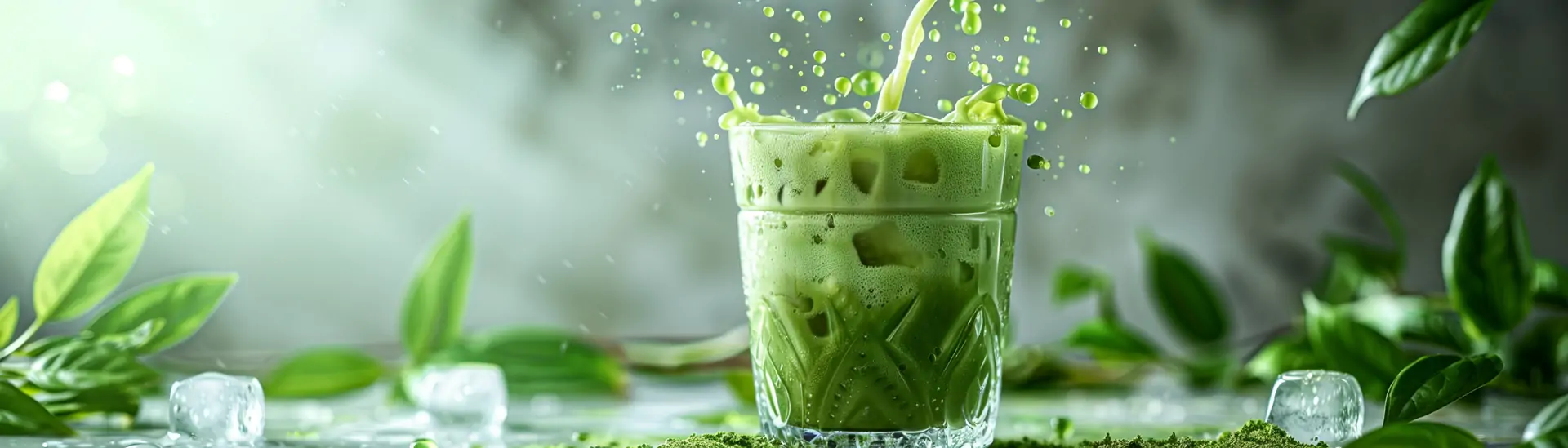
L-theanine has become a standard functional ingredient in the energy drink category. Combined with caffeine, it is marketed for “smooth focus” or “calm energy”—a positioning that appeals to consumers who want alertness without jitters.
This guide answers the consumer-facing question—which energy drinks contain L-theanine—and then pivots to the B2B question that matters for manufacturers: where to source L-theanine, and why matcha-derived theanine is an increasingly relevant option.
Energy Drinks That Feature L-Theanine
Several brands have built product lines around L-theanine paired with caffeine.
P90X Energy Drinks (Bodi) contain 200 mg caffeine and 200 mg L-theanine per serving, along with other functional ingredients. The brand positions the product for “energy, focus and performance” while minimizing jitters .
Calaveras functional energy drinks contain 200 mg caffeine from green coffee and 100 mg L-theanine, plus lion‘s mane and other ingredients .
Cobra Rise is marketed with L-theanine and caffeine for “balanced focus,” alongside Vitamin A .
These examples reflect a broader trend: L-theanine has moved from supplement capsules into mainstream ready-to-drink formats. For beverage manufacturers, this creates demand for a reliable, documentable L-theanine source.
Where Does L-Theanine Come From?
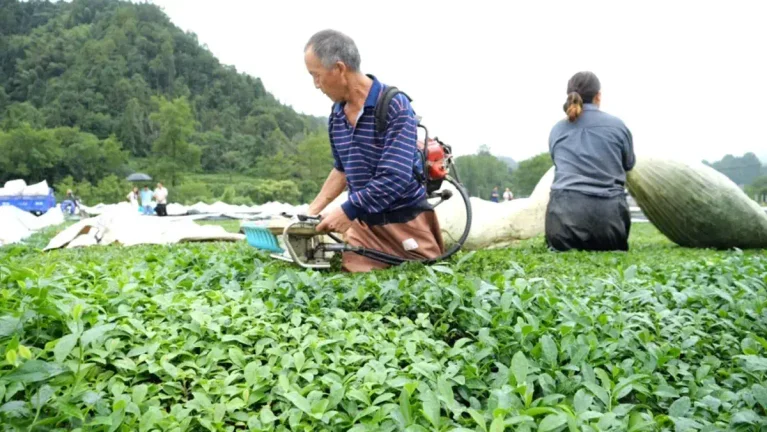
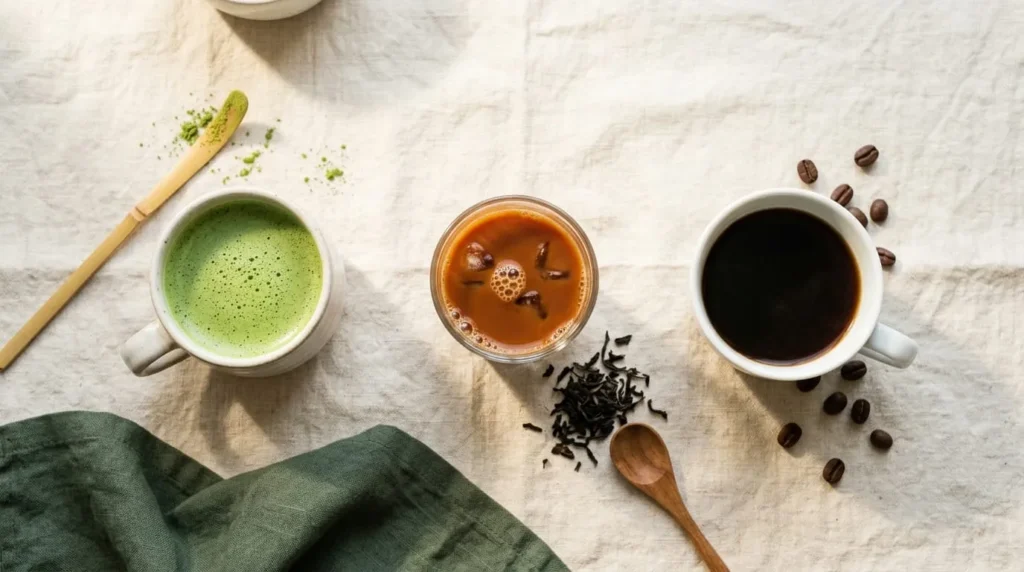
L-theanine occurs naturally in tea leaves, particularly in shade-grown green tea. Matcha—made from shade-grown tencha—is one of the richest natural sources. The shading process before harvest increases both chlorophyll and L-theanine content.
For B2B beverage manufacturers, there are two practical sourcing routes:
Synthetic or fermentation-derived L-theanine. Standardized to high purity, sold as an isolated ingredient. This is the most common route for precise dosing in functional beverages.
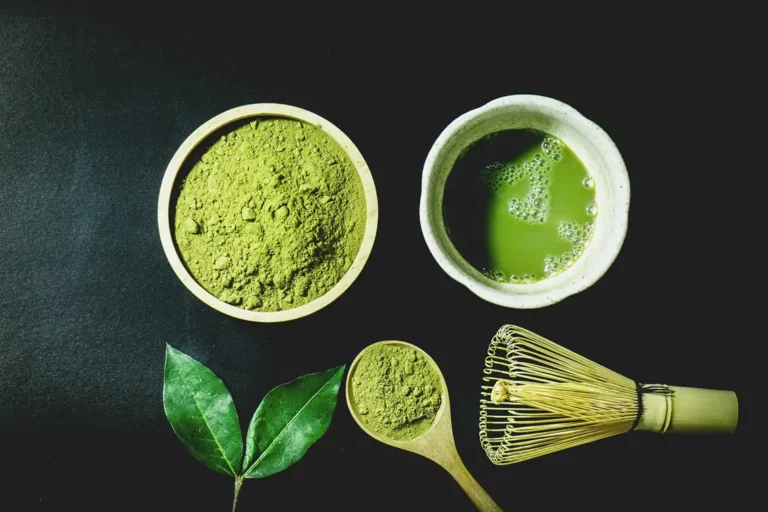
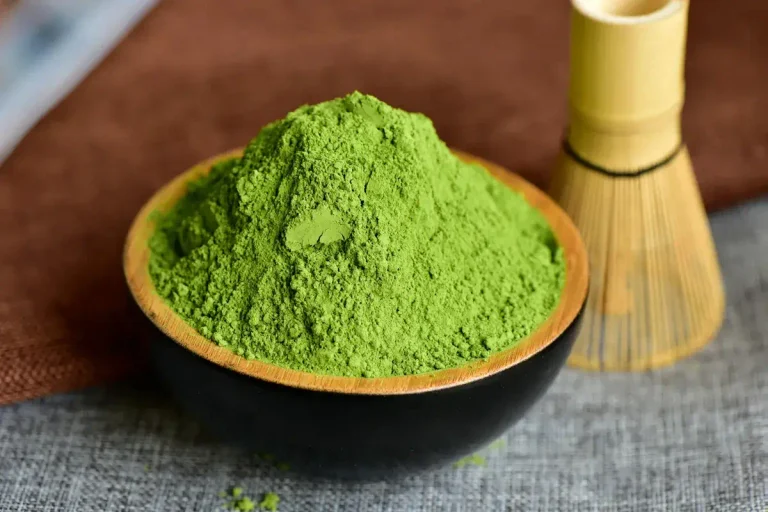
Matcha powder as a whole-food ingredient. Provides L-theanine alongside other naturally occurring compounds. Used in beverages where matcha is also the flavor and color component—matcha lattes, green energy drinks, and functional tea blends.
If your product positions matcha as an ingredient, sourcing matcha with documented L-theanine content may strengthen both the formulation and the marketing story.
Why Chinese Matcha for L-Theanine Sourcing
China is the world‘s largest matcha producer, with output exceeding 12,000 tons in 2025—nearly 70% of global supply . The two core regions, Guizhou and Zhejiang, have developed export-oriented supply chains with documentation systems for US and EU markets.
For beverage manufacturers, this offers:
- Scale: consistent supply at commercial volumes
- Documentation: lot-specific CoA, pesticide testing against destination MRLs, FDA registration
- Application flexibility: particle size adjustment for cold dispersion or dairy systems
- Cost structure: competitive pricing at commercial grades
A vertically integrated producer with owned tea gardens can provide traceability from finished matcha back to harvest date and field block—a level of documentation that supports both quality control and marketing claims.
FAQ
What energy drink has L-theanine and caffeine?
P90X Energy, Calaveras, and Cobra Rise are examples of energy drinks that combine caffeine with L-theanine . The ratio varies by brand; P90X uses 200 mg caffeine to 200 mg L-theanine, while Calaveras uses 200 mg caffeine to 100 mg L-theanine.
Is matcha a good source of L-theanine?
Yes. Matcha is made from shade-grown tea leaves, a cultivation practice that increases L-theanine content. For beverage manufacturers, matcha powder provides L-theanine alongside flavor and color, making it useful for matcha-positioned energy drinks.
Can I source L-theanine from Chinese matcha suppliers?
Yes. Chinese matcha producers supply matcha powder for beverage applications, with documentation including lot-specific CoA and pesticide testing. If L-theanine content is a claimed attribute, request lot-level analysis to support your formulation and labeling.
What certifications should a matcha supplier have for beverage manufacturing?
For US-bound products, confirm FDA facility registration and FSVP support. For EU-bound products, request pesticide residue data against current MRLs. Food safety certification such as BRC or FSSC 22000 is a strong additional indicator.
References
- U.S. FDA. Foreign Supplier Verification Programs (FSVP) for Importers of Food. https://www.ecfr.gov/current/title-21/chapter-I/subchapter-A/part-1/subpart-L