
How to Start a Matcha Business: A B2B Sourcing Guide
The global matcha market is no longer a niche. What began as a specialty café ingredient has become a mainstream input for beverage chains, bakery manufacturers, ice cream producers, and private-label brands across the US and EU. If you are planning to start a matcha business—whether as a distributor, a foodservice supplier, or a branded product line—the decisions you make at the sourcing stage will determine your margin, your compliance risk, and your product’s consistency.
This guide is written from the perspective of a vertically integrated matcha producer: one that owns tea fields, operates its own processing facility, and ships finished powder to B2B buyers. It covers what you actually need to verify before placing a first order.
Why Starting a Matcha Business Requires More Than Finding a Supplier
Most buyers begin with a search for “matcha powder wholesale” and end up with a list of trading companies. That is a workable starting point, but it creates a structural weakness. A trader’s quality depends on whichever factory they sourced from that month. Traceability stops at the trader’s warehouse.
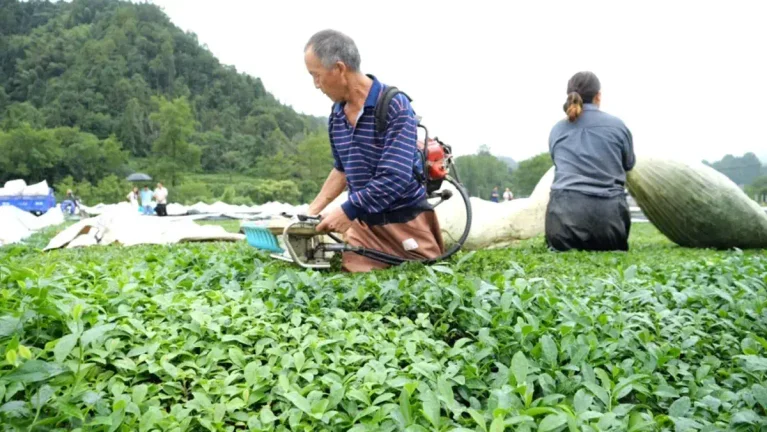
A vertically integrated producer—own tea gardens, own tencha processing, own milling—offers something different: batch-level traceability from field to finished powder. When a buyer asks which field a lot came from, or why one shipment tastes slightly different from the last, the answer exists in internal records, not in a supplier’s forwarded email.
For a new matcha business, this distinction matters most in the first 12 months. Consistency is what keeps your own customers reordering.
Step 1: Define Your Grade and Application Before You Contact Suppliers
Not all matcha is interchangeable. A culinary grade that performs well in a latte may fail in a baked application where color retention after heat exposure is critical. A ceremonial grade with high umami may be wasted in a smoothie where dairy and fruit mask nuance.
Before approaching suppliers, define:
- Application: beverage, bakery, ice cream, supplement, or private-label retail
- Target color profile: vibrant green for consumer-facing drinks vs. cost-tolerant for processed foods
- Solubility requirements: cold-water dispersion vs. traditional whisking
- Annual volume estimate: even a rough range helps suppliers quote realistically
Suppliers who mill tencha in-house can often adjust particle size distribution to suit specific applications. This is a practical advantage of working with a producer rather than a reseller.
Step 2: Verify Certifications for Your Destination Market
For US and EU buyers, certification is not a marketing badge. It is the documentation that allows your shipment to clear customs and satisfy your own customers’ compliance teams.
For the US market, the key framework is FDA compliance. Your supplier’s facility should hold a current FDA Food Facility Registration, and as the importer, you are responsible for Foreign Supplier Verification Program (FSVP) obligations . In 2026, the FDA issued warning letters to multiple matcha importers for FSVP failures—not because the product was unsafe, but because the importer could not produce verification records . Ask your supplier for their registration status and their willingness to support your FSVP file with batch documentation.
For the EU market, pesticide maximum residue limits (MRLs) are the enforcement flashpoint. In March 2026, the EU rejected a Chinese-origin matcha shipment for exceeding MRLs on multiple active substances, including thifluzamide and lambda-cyhalothrin . This is not an abstract risk. Buyers should request lot-specific pesticide residue test reports from an accredited laboratory, referenced to EU MRL standards.
Certifications to request at minimum:
- FDA Facility Registration confirmation
- EU Organic certificate (if organic claim is needed)
- BRC or FSSC 22000 food safety certification
- EU MRL-compliant pesticide test report per lot
Avoid suppliers who treat certification as a one-time PDF. Compliance is ongoing, and lot-level documentation is what protects your business.
Step 3: Understand the Production Chain (and Ask the Right Questions)
A producer with owned gardens will answer questions that traders cannot. Here are the checkpoints worth probing during supplier qualification:
Cultivation and Shading
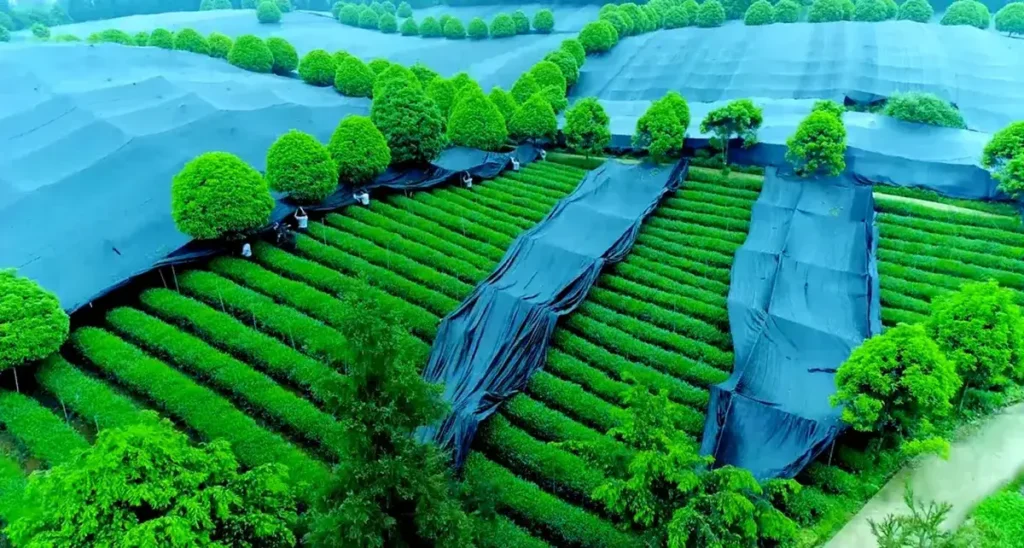
Tencha-grade matcha requires shade-grown leaves. The duration and method of shading (traditional straw vs. synthetic cloth) affect chlorophyll development, which drives color and L-theanine content. Ask how many days before harvest shading begins, and whether the supplier controls this internally or relies on contracted farms.
Milling Method
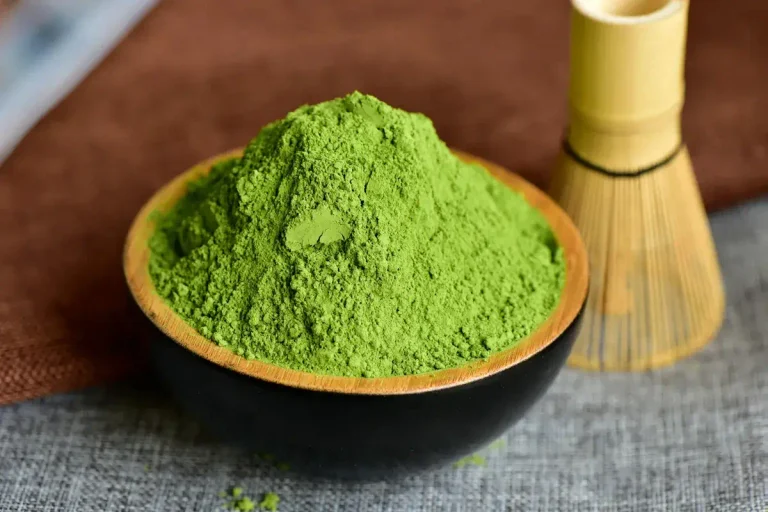
Stone mills produce matcha with a characteristic particle shape and heat profile. Jet mills offer higher throughput and adjustable particle size. Neither is inherently superior—what matters is that the supplier can explain which method they use and why it suits your application. A producer with in-house milling can provide particle size distribution data on request.
Quality Control at Batch Level
Request a sample Certificate of Analysis (CoA) for a recent production lot. A credible CoA includes moisture, microbial counts, heavy metals, and pesticide panel results. The supplier should be able to match the CoA lot number to a specific production date and field block—not just a generic “typical specification” sheet.
Step 4: Navigate MOQ, Samples, and Lead Times Realistically
First orders in matcha B2B sourcing typically range from 10 kg to 100 kg for sampling and market testing, scaling to full pallet quantities once a specification is locked. A producer with owned processing capacity can often accommodate smaller initial orders than a trader working through third-party mills.
Sample process: Request a production-representative sample, not a hand-prepared “best case” sample. Ask for the lot number the sample was drawn from. Evaluate it in your actual application—bake it, freeze it, mix it—before committing to a bulk order.
Lead time: Standard production lead time for matcha is typically 1 weeks after order confirmation, depending on grade, quantity, and whether custom milling or packaging is required. Harvest season timing (spring first flush vs. later flushes) can affect availability for specific grades.
Payment terms: First transactions commonly use T/T with a deposit and balance against shipping documents. Terms may shift for repeat buyers. Clarify Incoterms (FOB vs. CIF vs. DDP) before comparing quotes—landed cost is the only number that matters.
Step 5: Build a Compliance File Before Your First Shipment
The most common mistake new matcha businesses make is treating compliance as a shipping-time task. Build the file while you are still evaluating suppliers.
Your compliance folder should contain, at minimum:
- Supplier FDA registration confirmation (US-bound shipments)
- FSVP hazard analysis and supplier verification records (US importer responsibility)
- Lot-specific pesticide residue report referenced to destination MRLs
- Organic certificate and transaction certificate (if applicable)
- Certificate of Analysis for each batch
- Traceability documentation linking finished lot to harvest date and field
For EU organic shipments, verify that the supplier’s certifier can issue the Certificate of Inspection through TRACES NT before the vessel departs. Organic status can be lost if documentation gaps occur in transit.
FAQ
What certifications should a matcha supplier have for US buyers?
At minimum, the supplier’s facility should hold a current FDA Food Facility Registration. As the importer, you also need FSVP documentation demonstrating that you have verified the supplier’s food safety practices . Food safety scheme certification such as BRC or FSSC 22000 is a strong additional indicator of process control.
How do I verify pesticide compliance for EU-bound matcha?
Request a lot-specific pesticide residue test report from an accredited laboratory, with results compared against current EU MRLs for tea products. Do not accept a generic “EU compliant” statement without the underlying data. EU enforcement has become stricter, with MRL reductions for certain active substances taking effect in 2026 .
What is a realistic MOQ for a first matcha order?
MOQ varies by supplier and grade. Vertically integrated producers may accommodate initial orders in the 1 kg range for standard grades, with higher MOQs for custom milling or private-label packaging. Always clarify whether the MOQ applies per SKU or per order.
How long does it take to receive matcha samples?
Sample dispatch typically takes business days after request, with shipping time depending on destination. Request samples from a specific production lot so that your evaluation reflects the product you will actually receive in bulk.
Can I get private-label matcha from a Chinese producer?
Yes, provided the producer has in-house milling and packaging capability. Private-label projects typically require: confirmed specification (grade, particle size, packaging format), artwork and regulatory label review for your market, and a minimum order quantity that covers setup and production run costs. Ask for a timeline and cost breakdown before committing.
Reference
- 1.FDA FSVP guidance:https://www.fda.gov/
- 2.EU RASFF / pesticide MRL database:https://sorry.ec.europa.eu/