What is the best brand of matcha?
What is the best brand of matcha? This is the top question for B2B buyers, cafe owners, private-label formulators and retail brand founders sourcing matcha for lattes, baked goods, wellness blends and consumer powder packs. Many articles online simply list popular consumer matcha brands, but the “best” option is not universal. The right matcha brand depends entirely on your use case, target market, order volume, budget, certification requirements and regulatory compliance for North America or Europe. This article breaks down how to evaluate matcha suppliers, reviews leading options by business application, and outlines non-negotiable quality checks buyers must complete before committing to a vendor.
There is no single “best” matcha brand
First, matcha quality is defined by origin, harvest grade, stone grinding standards, freshness, lab testing and consistency. A brand ideal for ceremonial tea service may perform poorly in bakery applications, while a low-cost bulk culinary supplier might fail EU or US import safety requirements.
Second, traditional Japanese production regions, especially Uji in Kyoto, Nishio and Shizuoka, have a long-standing reputation for premium matcha. Still, high-quality culinary-grade matcha can also come from modern farms outside Japan, offering cost advantages for high-volume food manufacturing.
Third, the key for B2B buyers is to separate brand marketing claims from verifiable batch data. When evaluating any supplier, avoid judging matcha by branding alone. Colour, aroma, flavour profile and third-party lab certificates are far more important than a well-known logo.
Core criteria to judge any matcha brand
Before comparing brand names, define your evaluation checklist. These metrics separate reliable suppliers from low-quality resellers.
1. Traceability and farming origin
To start, trustworthy brands disclose farm location, cultivar type, harvest season and batch harvest date. Many low-grade matcha resellers sell blended powder with no clear source documentation. For premium ceremonial matcha, first-flush harvest from young shaded shoots delivers richer umami and higher L-theanine. Culinary grades often use second or third flush leaves, built to stand up to heat, sugar and dairy in lattes and baking.
2. Certifications matching your target market
Next, certifications must align with where you sell. USDA Organic, EU Organic, JAS Organic, HACCP and ISO 22000 are common requirements. Organic certification only confirms farming practices; it does not automatically guarantee low heavy metal levels, as soil contaminants are independent of pesticide use. Brands selling into the EU must comply with EU MRL pesticide rules. US-bound products need documentation for FSVP importer verification.
3. Batch-by-batch third-party laboratory testing
Most importantly, this is the most critical requirement for B2B sourcing. Reputable brands provide a unique Certificate of Analysis (COA) for every production batch. Essential tests include heavy metals (lead, cadmium, arsenic, mercury), multi-residue pesticide screening, microbiological testing for salmonella and mould, and sometimes radiation testing for Japanese-origin tea. Testing should be completed by independent accredited labs such as Eurofins or SGS, not only internal in-house testing.
4. Freshness and grinding practices
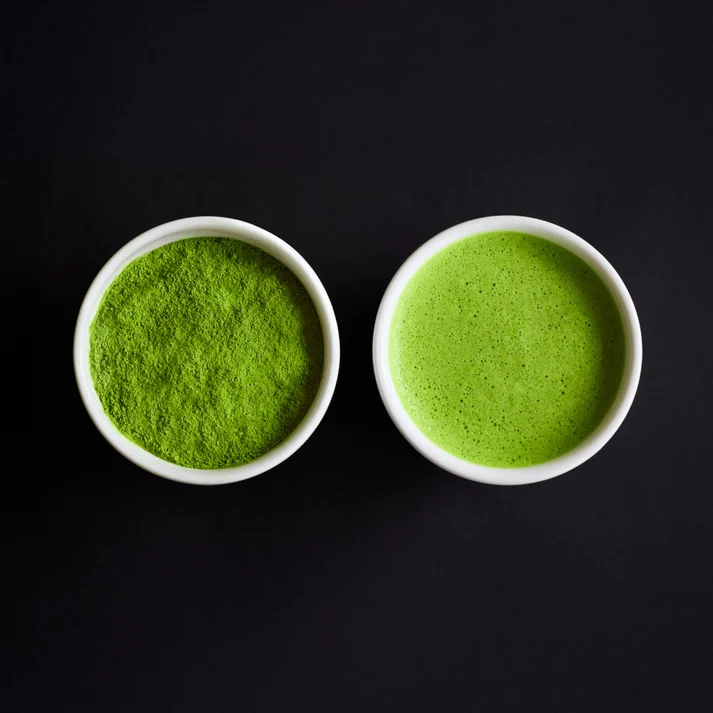
Additionally, premium matcha oxidates quickly after stone grinding. The best brands grind to order or maintain short shelf windows after milling. Poor storage in hot, bright environments degrades chlorophyll, fading the bright green colour and breaking down L-theanine and EGCG. Brands that ship matcha in opaque, airtight packaging with clear manufacture and expiry dates will deliver consistent colour and flavour for your finished products.
5. B2B capabilities: MOQs, private label and logistics
Finally, for commercial buyers, brand suitability also hinges on business terms. Small cafes and startup wellness brands need low minimum order quantities. Large CPG manufacturers require bulk pallet pricing, custom private label packaging, stable long-term supply chains and reliable cross-border shipping. Some heritage Japanese tea houses focus only on small-volume ceremonial sales and cannot support large industrial orders.
Leading matcha brands and suppliers by use case
Heritage Japanese ceremonial-focused brands
Ippodo and Marukyu Koyamaen are two historic Kyoto tea houses widely respected for ceremonial-grade matcha. These family-run producers specialise in traditional stone-ground tencha, with deep farm heritage and exceptional flavour. They are best suited for luxury tea rooms, premium retail packs and low-volume, high-margin consumer lines.
On the downside, their main limitations for B2B buyers are higher price points, larger minimum orders in some cases, and less flexibility for custom private label packaging. These are not the ideal pick for mass-market baking or large-volume RTD beverage production.
Direct-to-farm wholesale Japanese suppliers
Brands such as Encha, Naoki Matcha and Mizuba Tea Co work directly with Japanese family farms, cutting out multiple middlemen. They offer both ceremonial and culinary grades, provide batch COAs, and have well-established wholesale and private label programs. These suppliers work well for medium-sized cafes, specialty retail brands and wellness product lines that want Japanese origin storytelling paired with transparent safety testing.
In fact, they strike a strong balance between quality, traceability and reasonable MOQs, making them a favourite for brands building premium matcha lattes and consumer powder lines.
Bulk culinary and industrial B2B manufacturers
For large-scale food production, bakery mixes, ice cream, ready-to-drink beverages and value retail lines, industrial matcha manufacturers offer competitive pricing and high-volume capacity. Many have adopted Japanese shade-growing and stone-grinding techniques, delivering stable colour and flavour for heat-processed applications.
Moreover, these suppliers are built for OEM and private label projects. Their strength is scalability, custom blending and lower per-kilogram pricing. Buyers must still audit COAs carefully and confirm compliance with EU and US food safety standards. Their ceremonial-grade offerings are usually limited, as their focus is culinary ingredient performance.
Budget entry-level consumer brands
Many popular DTC consumer matcha brands market heavily on social media. While some have solid quality, many source blended powder and outsource production. These brands work for small consumer retail orders but are often less suitable for B2B manufacturing. Their pricing is rarely competitive for bulk purchases, and batch-to-batch consistency can vary.
How to pick the right matcha brand for your business
Start by defining your product application:
- Ceremonial bowls, premium wellness retail: Prioritise Japanese origin, first-flush harvest, full traceability and low heavy metal test results. Heritage Kyoto brands or farm-direct wholesale suppliers fit this niche.
- Café lattes, bubble tea: Choose premium culinary grade, stable green colour, balanced flavour that holds up with milk and sweeteners. Consistency across batches is more important than ultra-premium umami.
- Baking, ice cream, heat-treated formulations: Select heat-stable culinary matcha. High heat can amplify bitter notes, so test small samples first. Industrial bulk suppliers often deliver better value here.
- Private label wellness powders and functional blends: Require full COAs, organic certifications and compliance documentation for your target market. Confirm the supplier can print custom packaging and meet your MOQ.
As a rule of thumb, sample testing is non-negotiable. Always request small trial samples from 2–3 shortlisted brands before placing large orders. Evaluate colour, aroma, taste, mixing behaviour and stability in your exact formulation.
Common myths about choosing a matcha brand
Myth 1: Japanese origin automatically equals the best matcha
False. Japan produces world-class matcha, but not all Japanese matcha is premium. Some Japanese bulk exports are lower-grade culinary powder. Poor farming or inadequate post-harvest handling can create quality or safety issues regardless of country of origin. Conversely, non-Japanese producers can make excellent culinary-grade matcha with rigorous lab controls.
Myth 2: Organic branding means no heavy metals
False. Organic rules restrict synthetic pesticides, but they cannot remove heavy metals naturally present in soil. Even certified organic matcha requires independent heavy metal testing for every batch.
Myth 3: The most expensive brand is always the highest quality
False. High pricing may reflect marketing, import tariffs or heritage brand markup, not better flavour or safety. A mid-priced supplier with consistent batch COAs can outperform a luxury brand for B2B formulation needs.
Myth 4: All brands use stone-ground matcha
False. Some products labelled “matcha” use high-speed mechanical milling. Mechanical grinding creates heat, damaging delicate compounds and altering flavour and colour. True matcha is stone ground from tencha leaves. Always verify milling methods with your supplier.
B2B sourcing best practices
- Request COAs for the exact batch you intend to buy, not generic old sample reports.
- Run your own independent third-party testing on incoming shipments for high-volume production.
- Validate that certifications are recognised in your selling region. A certification valid in Asia may not be accepted by EU or US regulators.
- Test samples in your finished product, not just whisked in plain water. Behaviour changes drastically in baked goods, hot lattes or cold smoothies.
- Build a secondary supplier backup. Supply chain disruptions, harvest shortages or batch failures can halt production if you rely on only one brand.
- Avoid brands that refuse to disclose harvest information, lab test data or farm sourcing details. Lack of transparency is a major red flag.
Final takeaways
What is the best brand of matcha? There is no universal winner. The best matcha brand is the supplier that matches your product application, volume needs, budget, certification requirements and regulatory compliance obligations.
For luxury ceremonial use, heritage Japanese tea houses are strong contenders. For medium-volume cafes and premium wellness retail, farm-direct Japanese wholesale suppliers offer transparency and balance. For mass baking, RTD and large-scale manufacturing, specialised industrial matcha producers deliver scalable, cost-effective culinary-grade powder.
Regardless of brand name, the most important safeguards are batch traceability, accredited third-party testing, sample validation and verified compliance with the food rules of your target markets. For B2B matcha buyers, prioritising these factors protects your brand reputation and keeps your products compliant for sale in Europe and North America.
References
- EFSA. Pesticide residue and heavy metal guidance for botanical food ingredients, 2021
- FDA FSVP guidance for food importers, 2024
- Food Additives & Contaminants. Heavy metal testing protocols for tea powders
- JAS Organic standards for Japanese matcha tencha production