
Which grade of matcha is healthiest?
If you search matcha health content online, you will quickly run into one of the most persistent myths in the matcha industry: ceremonial grade matcha is automatically the healthiest option, while culinary grade is only good for baking. This simplified marketing claim ignores decades of phytochemical research. The scientific answer is nuanced: there is no single “healthiest” grade for everyone. Health benefits depend on which bioactive compounds you prioritise, alongside cultivation, leaf maturity, processing, purity and storage conditions. This article breaks down matcha grading, published research findings, and practical guidance for B2B buyers and consumers selecting matcha for wellness applications.
What do matcha grades actually mean?
First, a critical industry fact: “ceremonial grade”, “premium grade” and “culinary grade” are not legally defined or certified terms under Japan’s JAS (Japanese Agricultural Standards) administered by MAFF, the Ministry of Agriculture, Forestry and Fisheries. These tiered labels were popularised by Western importers to segment the market, rather than official Japanese regulatory categories. Japanese tea farmers and judges evaluate matcha by colour, aroma, particle fineness, moisture and absence of stems/veins, not by the Western “ceremonial vs culinary” naming convention.
That said, the industry classification still describes real differences in raw material:
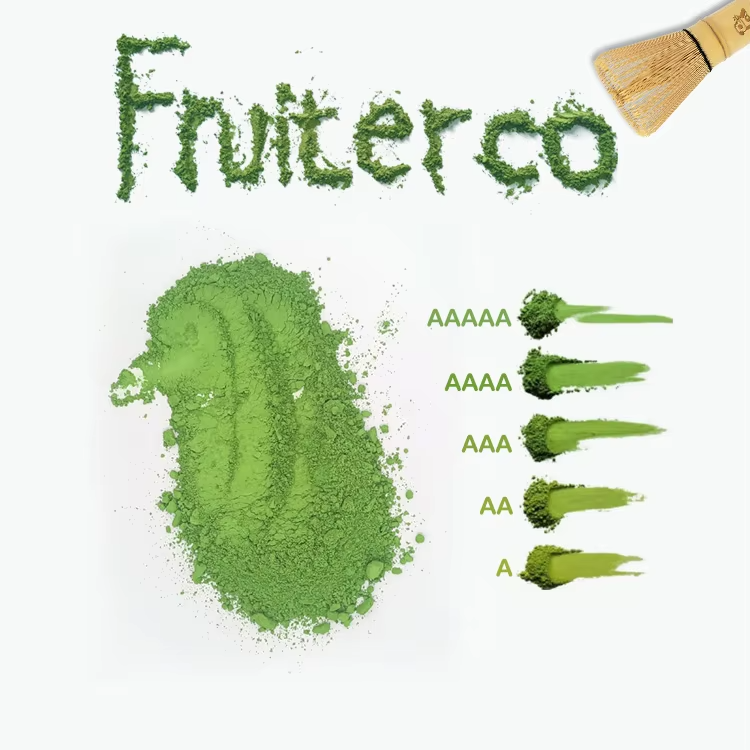
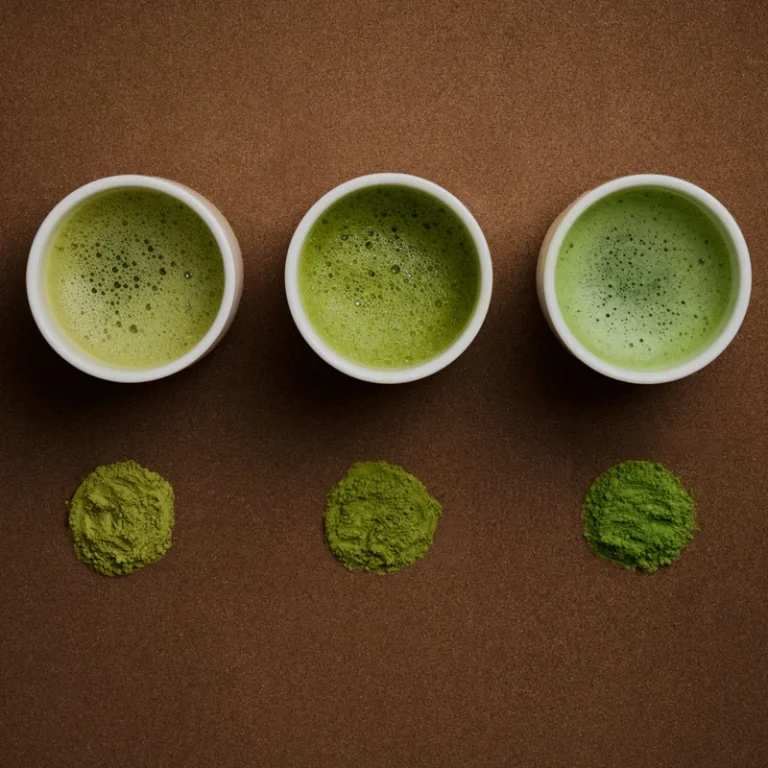
- Ceremonial grade: Made from the youngest spring buds and first flush leaves, shaded for 20–30 days before harvest. Stems and leaf veins are fully removed before stone grinding. It is intended for pure drinking, whisked only with hot water.
- Premium / everyday drinking grade: Also shaded, usually first or early second flush, slightly more mature leaves. Balanced umami and mild bitterness, widely used for matcha lattes and daily drinking.
- Culinary grade: Harvested later in the growing season, second or third flush, with less shading time. Leaves are more mature, with more tannins and bitter notes. Designed for blending into baked goods, smoothies, ice cream and industrial food formulations.
The core biochemical difference comes down to leaf age and shading. When tea plants are shaded, they produce more chlorophyll and amino acids (especially L-theanine) to capture limited sunlight. Less shading and more mature leaves shift metabolism toward higher polyphenol and catechin production as a natural plant defence mechanismPMC.
Key bioactive compounds and how they differ by grade
A peer-reviewed metabolomics study published in Molecules (PMC, 2024) compared three commercial matcha grades: ceremonial grade (G1), mid-grade (G4), and food/culinary grade (FG). Using HPTLC and NMR spectroscopy, researchers confirmed a clear inverse trend: amino acids and caffeine decrease as grade falls, while total polyphenols increase in lower, culinary-style gradesPMC.
L-theanine: calm alertness, highest in ceremonial grade
L-theanine is the signature amino acid in matcha, famous for promoting relaxed focus without the jittery spike seen from pure caffeine. Clinical research links L-theanine to modulation of alpha brain waves and stress reduction.
The PMC comparative study found ceremonial grade matcha contains the highest L-theanine concentration, with levels gradually dropping in mid-grade and culinary gradesPMC. Typical published ranges are approximately 21–46 mg/g for ceremonial grade, 18–36 mg/g for premium drinking grade, and 10–20 mg/g for culinary grade.
This makes ceremonial grade the best choice for users targeting cognitive wellness and stress support, because it delivers the most favourable L-theanine-to-caffeine ratio. The balanced pairing of L-theanine and caffeine slows caffeine absorption, creating sustained alertness rather than sudden energy crashes.
EGCG and total catechins: higher in culinary grade
EGCG (epigallocatechin gallate) is the most widely researched catechin, valued for its strong antioxidant activity. Many consumers assume premium ceremonial matcha has the highest EGCG, but published data contradicts this assumption.
In the same Molecules metabolomics research, polyphenols and flavonoids such as kaempferol and rutin were concentrated in older leaves, corresponding to culinary grade matchaPMC. A separate HPLC study comparing ceremonial, premium and culinary matcha also found ceremonial grade had the lowest average EGCG among the three groups, while culinary samples had the highest EGCG concentrations, ranging around 65–100 mg/g compared to 50–80 mg/g for ceremonial grade.
The reason is shading: shading suppresses catechin synthesis. Young shaded leaves prioritise amino acid production, while sun-exposed, mature leaves build higher levels of defensive phenolic compounds including EGCG. For buyers selecting matcha primarily for high antioxidant and EGCG intake, culinary grade often delivers higher catechin content per gram.
Caffeine: ceremonial grade contains more caffeine
Young tea buds naturally accumulate more caffeine than older leaves. A PMC study comparing commercial matcha and green tea samples reported average caffeine of 31.45 mg/g in ceremonial matcha versus 26.29 mg/g in culinary matcha, a statistically significant difference (p = 0.002)PMC.
This is an important health consideration. For consumers sensitive to caffeine, pregnant users, or people avoiding stimulant intake, ceremonial grade may be less suitable despite its premium branding. Culinary grade, with lower average caffeine, can be a gentler option, though all matcha still contains meaningful caffeine.
Chlorophyll, vitamins and minerals
Chlorophyll gives matcha its vivid green colour. Extended shading increases chlorophyll synthesis, so ceremonial grade generally has higher chlorophyll content and brighter green colour. Chlorophyll acts as an antioxidant and supports detoxification pathways.
All pure matcha, regardless of grade, contains vitamin K, dietary fibre, beta-carotene, calcium, magnesium and zinc. Unlike brewed green tea, where most leaf solids are discarded, matcha is whole leaf powder, so all these nutrients are fully consumed. Even culinary grade retains these micronutrients; grade differences affect the concentration of specialised bioactives, not the basic presence of vitamins and fibre.
Which grade is healthiest for your goal?
There is no universal winner. The healthiest grade depends on wellness objectives:
Goal: calm focus, stress relief, low bitterness, pure drinking. Ceremonial grade is the best fit. It delivers maximum L-theanine, optimal L-theanine/caffeine balance, highest chlorophyll, and minimal astringency. It is ideal for consumers who drink matcha plain, and for functional beverage products targeting mental wellness. Keep in mind it has higher caffeine and lower EGCG than culinary grades.
Goal: maximum antioxidants, high EGCG, cost-effective wellness formulations. Culinary grade offers higher polyphenol and EGCG content. It works well in smoothies, baked goods, functional food additives and bulk B2B formulations where bitter notes are masked by sugar, milk or other ingredients. The trade-off is lower L-theanine and stronger astringency if consumed neat.
Goal: balanced nutrition for daily lattes and everyday wellness. Premium / latte grade is the middle ground. It retains good L-theanine and chlorophyll while offering higher EGCG than ceremonial grade, with a smoother flavour than culinary grade. This is the most versatile option for cafes, retail ready-to-drink matcha beverages and general daily wellness use.
Factors more important than grade labels
When evaluating matcha for health benefits, the label “ceremonial” or “culinary” is less important than these four evidence-based factors:
- Purity and adulteration risk Not all green powder labelled “matcha” is genuine tencha leaf powder. Some low-cost products use ordinary green tea powder, artificial green colourants or additives. Adulterated products will not deliver the expected L-theanine, EGCG or micronutrients, regardless of grade claims. Third-party laboratory testing for catechins, amino acids, heavy metals and pesticide residues is essential for B2B sourcing.
- Cultivar and harvest timing Tea cultivar strongly affects metabolite profiles. Research published in Foods (PMC) shows cultivars such as Okumidori, widely used for premium matcha, have distinct catechin and amino acid profiles compared with other varietiesPMC. Even within the same grade, different harvest years and harvest weeks create large variations in bioactive compounds.
- Particle size and freshness Stone grinding produces finer particles, improving bioaccessibility of polyphenols and amino acids. Matcha oxidises quickly once milled. Poor storage, exposure to heat, light or oxygen rapidly degrades chlorophyll and catechins, reducing health benefits even in high-grade ceremonial matcha.
- Consumption dosage Many consumers overfocus on per-gram content while ignoring serving size. A larger serving of culinary matcha may deliver more total antioxidants than a small serving of ceremonial matcha. For health effects, total intake matters alongside concentration.
Practical takeaways for B2B buyers and consumers
For B2B customers including beverage brands, bakery manufacturers, supplement formulators and retail brands, the key takeaway is to stop relying solely on marketing grade names. Instead, specify target biochemical profiles in your product brief:
- For calm-focus functional drinks: specify high L-theanine, controlled caffeine, low astringency.
- For high-antioxidant food ingredients: prioritise third-party verified EGCG and total polyphenol values.
- For retail consumer education: clearly communicate the trade-offs, rather than claiming one grade is universally healthier.
For end consumers, avoid the oversimplified belief that higher price equals greater health benefits. If you drink matcha plain and want sustained calm energy, ceremonial grade is the better wellness choice. If your priority is high antioxidant intake and you will mix it into lattes, baking or smoothies, high-quality culinary grade can deliver stronger EGCG at a lower cost.
All genuine, pure matcha grades offer meaningful health advantages over brewed green tea because the whole leaf is consumed. The “healthiest” matcha is the pure, fresh, lab-tested grade that matches your intended wellness goal and consumption format.
References
- Molecules. A Comparative Multianalytical Approach to the Characterization of Different Grades of Matcha Tea (Camellia sinensis (L.) Kuntze). PMC12157965.
- Molecules. Catechin Composition, Phenolic Content, and Antioxidant Properties of Commercially-Available Bagged, Gunpowder, and Matcha Green Teas. PMC10665233.
- Mae Fah Luang University. The Comparison of Epigallocatechin Gallate Levels in Matcha Powders in Ceremonial, Premium and Culinary Grade by HPLC Method. Postgraduate research paper, 2025.
- Japanese Ministry of Agriculture, Forestry and Fisheries (MAFF) JAS framework for tea; “ceremonial grade” is not a defined JAS category.